Accountant for Consultants: Handling Client Revenue
Last updated: March 6, 2026
Consultants face a specific financial challenge that most W-2 employees never deal with: irregular client revenue that arrives on different schedules, from different sources, and often across state or national lines. An accountant for consultants handling client revenue does more than file a tax return once a year. They help you track income from multiple clients, manage estimated tax payments, claim the right deductions, and keep your books clean enough to make smart business decisions. If you’re a consultant earning $50,000 or $500,000 from client work, the way you handle that revenue directly affects how much you keep.
This guide explains what a specialized accountant does for consultants, when you need one, how to choose the right professional, and the common revenue-handling mistakes that cost consultants money every year.
Key Takeaways
- Consultants need accountants who understand project-based, irregular income — not just standard payroll accounting.
- Tracking client revenue by source and timing matters for accurate tax reporting and cash flow planning.
- Estimated quarterly tax payments are required for most consultants and carry penalties if underpaid.
- Revenue recognition method (cash vs. accrual) affects when you owe taxes and how your financials look.
- A good accountant helps consultants separate business and personal finances, which is critical during audits.
- Deductions specific to consultants (home office, travel, software, subcontractors) require proper documentation.
- Bookkeeping services for consultants should categorize income by client, project, and payment type.
- Choosing between a CPA, enrolled agent, or bookkeeper depends on the complexity of your consulting revenue.
- Virtual bookkeeping and accounting services work well for consultants who operate remotely or travel frequently.
- Finding a professional tax accountant with consulting-industry experience can reduce your tax bill and audit risk.
Quick Answer

An accountant for consultants handling client revenue manages the unique financial needs of consulting professionals: tracking income from multiple clients, choosing the right accounting method, making quarterly estimated tax payments, and maximizing deductions. Most consultants benefit from hiring a professional tax accountant or CPA once their annual revenue exceeds $30,000 to $50,000, or when they have clients in multiple states. The right accountant saves you time, reduces errors, and often pays for themselves through lower tax liability.

Why Do Consultants Need a Specialized Accountant for Handling Client Revenue?
Consultants earn money differently than most businesses, and that difference creates specific accounting needs. Unlike a retail store with daily sales or a salaried employee with a predictable paycheck, consultants typically invoice clients on project milestones, retainer agreements, or hourly billing — often with payment delays of 30 to 90 days.
Here’s what makes consulting revenue uniquely complex:
- Multiple income streams: You might have three to ten active clients at once, each with different payment terms and contract structures.
- Irregular timing: A $20,000 payment might arrive in March, then nothing until June. Cash flow planning becomes essential.
- 1099 reporting: Each client paying you $600 or more in a year issues a 1099-NEC, and discrepancies between what clients report and what you file trigger IRS notices.
- Multi-state obligations: If you serve clients in different states, you may owe taxes in those states too.
- Self-employment tax: Consultants pay both the employer and employee portions of Social Security and Medicare taxes — currently 15.3% on net earnings.
A general accountant can handle basic tax filing. But a professional tax accountant who understands consulting work will structure your finances to minimize tax liability while keeping you compliant. If you’re unsure whether your situation warrants professional help, this guide on signs you should hire a tax accountant this year can help you decide.
Common mistake: Many new consultants treat all revenue as a lump sum and don’t track it by client or project. This makes it nearly impossible to reconcile 1099 forms, identify your most profitable work, or defend yourself in an audit.
How Does an Accountant for Consultants Handle Client Revenue Tracking?
Revenue tracking for consultants starts with categorizing every dollar of income by client, project, date received, and payment method. A qualified accountant sets up systems that make this automatic rather than something you scramble to reconstruct at tax time.
What a Revenue Tracking System Looks Like
| Element | What It Captures | Why It Matters |
|---|---|---|
| Client name | Who paid you | Matches 1099 forms; identifies top clients |
| Project or engagement | What the payment was for | Profitability analysis by project type |
| Invoice date vs. payment date | When you billed vs. when you received funds | Cash vs. accrual accounting; cash flow forecasting |
| Payment method | Check, ACH, wire, PayPal, etc. | Bank reconciliation; fee tracking |
| Amount before fees | Gross revenue | Accurate income reporting |
| Processing fees | Platform or payment processor charges | Deductible business expense |
| State of client | Where the client is located | Multi-state tax obligations |
Your accountant will typically use cloud-based bookkeeping software (QuickBooks Online, Xero, or FreshBooks are common choices) to automate much of this. For consultants who want to learn more about keeping their books organized, our resource on bookkeeping services for consultants managing client income covers the basics.
Cash Basis vs. Accrual Basis: Which Should You Use?
This is one of the first decisions your accountant will help you make:
- Cash basis: You report income when you actually receive payment. Most solo consultants use this method because it’s simpler and aligns with when you have money in the bank.
- Accrual basis: You report income when you earn it (when you invoice), regardless of when the client pays. This method is required for some larger consulting firms and gives a more accurate picture of financial performance.
Choose cash basis if you’re a solo consultant or small firm with straightforward billing. Choose accrual basis if you carry large accounts receivable balances, have inventory (rare for consultants), or your gross receipts exceed $30 million annually (IRS threshold).
Edge case: If you send a $15,000 invoice on December 28 and the client pays on January 5, cash basis means that income falls in the next tax year. Accrual basis means it counts in the current year. Your accountant can help you time invoices strategically around year-end.
What Tax Obligations Do Consultants Face on Client Revenue?
Consultants owe federal income tax, self-employment tax, and potentially state and local taxes on their net consulting income. The total effective tax rate for consultants often ranges from 25% to 40%, depending on income level and state of residence.
Estimated Quarterly Tax Payments
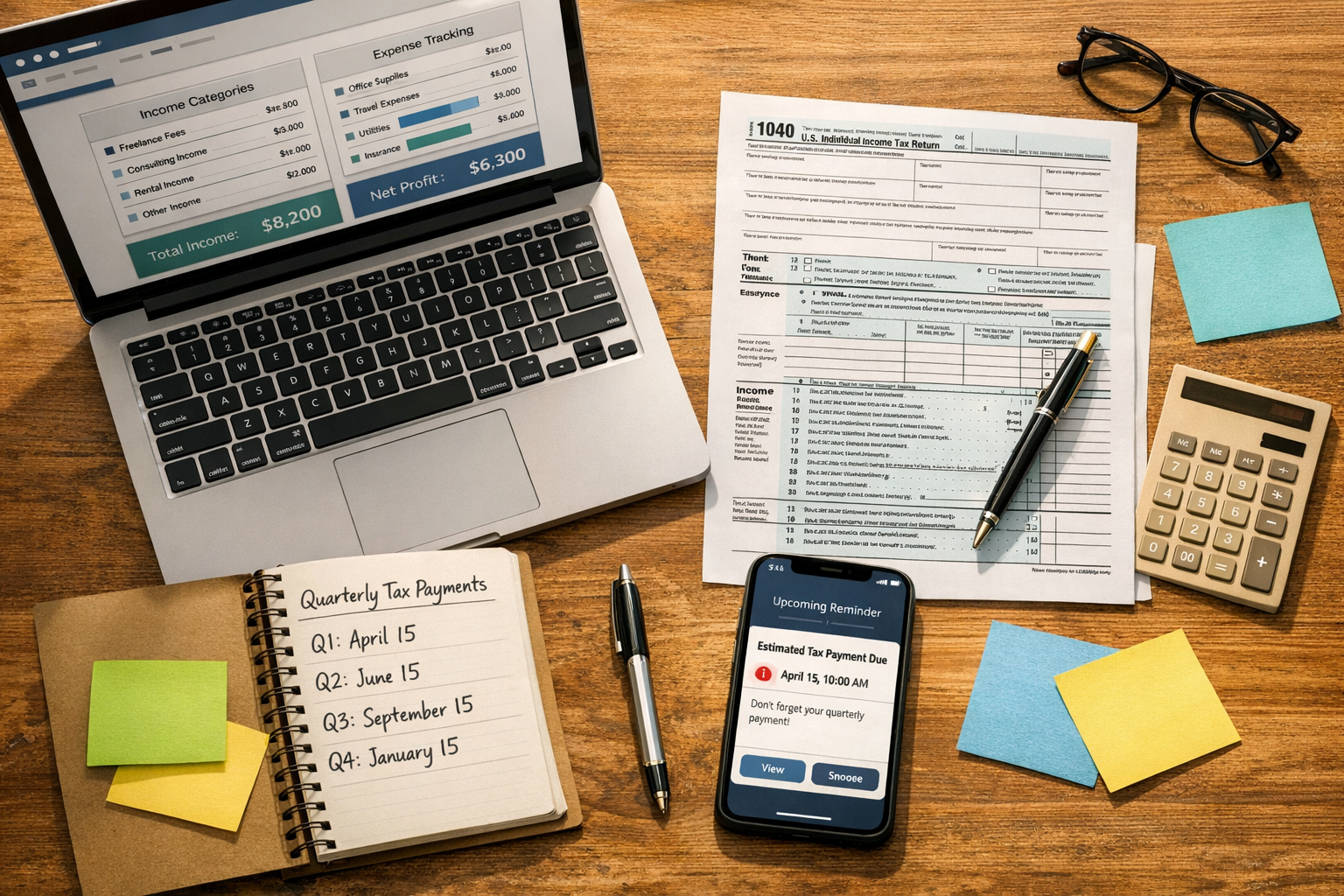
The IRS expects you to pay taxes as you earn income, not just once a year. For consultants, this means making estimated tax payments four times per year:
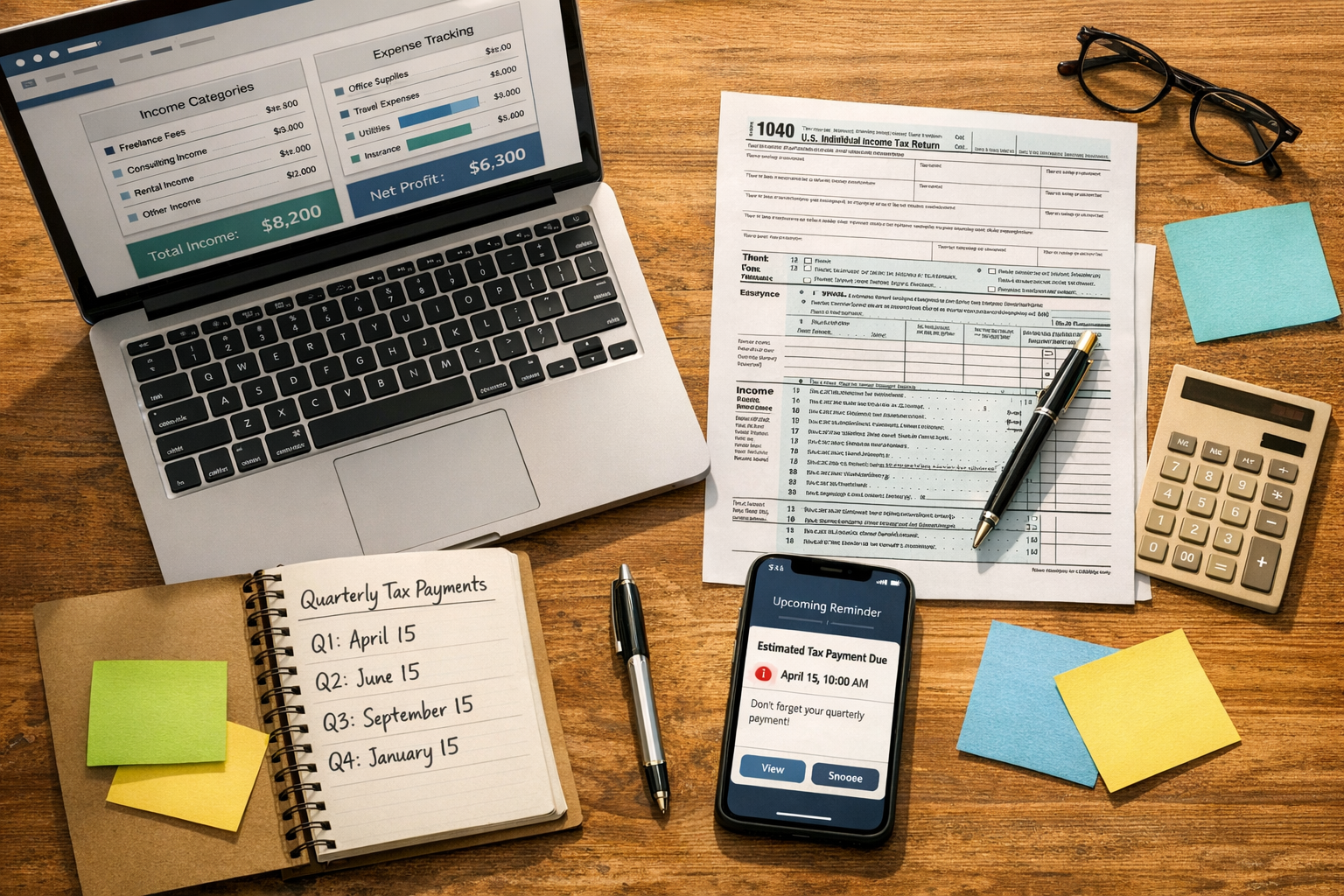
- Q1: Due April 15
- Q2: Due June 15
- Q3: Due September 15
- Q4: Due January 15 (of the following year)
If you underpay your estimated taxes, the IRS charges a penalty. Your accountant calculates these payments based on your projected annual income and adjusts them quarterly as your actual revenue becomes clearer.
Self-Employment Tax
As a consultant, you pay 15.3% in self-employment tax on your first $168,600 of net earnings (2026 figure, adjusted annually for inflation), plus 2.9% Medicare tax on earnings above that threshold. An additional 0.9% Medicare surtax applies to earnings above $200,000 for single filers ($250,000 for married filing jointly).
The Qualified Business Income (QBI) Deduction
Many consultants can deduct up to 20% of their qualified business income under Section 199A. However, consulting is classified as a “specified service trade or business,” which means the deduction phases out at higher income levels:
- Single filers: Phase-out begins at $191,950 (2026 estimate, indexed for inflation)
- Married filing jointly: Phase-out begins at $383,900
Your accountant determines whether you qualify and how to structure your income to maximize this deduction. For a deeper look at how accountants handle these complex situations, see our guide on how a tax accountant helps with complex tax situations.
What Deductions Can Consultants Claim Against Client Revenue?
A knowledgeable accountant identifies every legitimate deduction to reduce your taxable consulting income. Here are the most common ones:
Home office deduction: If you use a dedicated space in your home regularly and exclusively for consulting work, you can deduct a portion of your rent or mortgage, utilities, and insurance. The simplified method allows $5 per square foot, up to 300 square feet ($1,500 maximum).
Business travel: Flights, hotels, meals (50% deductible), and transportation to meet clients or attend industry conferences.
Professional development: Courses, certifications, books, and conference fees related to your consulting specialty.
Software and tools: Project management software, CRM systems, accounting software, communication tools.
Subcontractor payments: If you hire other consultants or freelancers to help with client work, those payments are deductible (and you’ll need to issue them 1099 forms).
Health insurance premiums: Self-employed consultants can deduct 100% of health insurance premiums for themselves and their families, subject to certain rules.
Retirement contributions: SEP-IRA contributions (up to 25% of net self-employment income, capped at $69,000 for 2026) or Solo 401(k) contributions reduce your taxable income significantly.
Decision rule: If you’re spending more than an hour per month tracking deductions yourself, or if you’re unsure whether an expense qualifies, it’s time to work with a professional. Learn more about accounting services for consultants managing income and expenses.
How Do You Choose the Right Accountant for Your Consulting Business?
Not every accountant is the right fit for a consultant. You need someone who understands project-based revenue, self-employment tax, and the specific deductions available to service-based businesses.
Types of Professionals to Consider
| Professional | Best For | Typical Cost Range |
|---|---|---|
| CPA (Certified Public Accountant) | Complex tax situations, multi-state filing, entity structuring, audit representation | $200–$500+/hour or $1,500–$5,000+ annually |
| Enrolled Agent (EA) | Tax preparation and IRS representation; often less expensive than CPAs | $150–$350/hour or $800–$3,000 annually |
| Tax preparer | Straightforward annual tax filing | $200–$800 per return |
| Bookkeeper | Ongoing revenue tracking, expense categorization, bank reconciliation | $300–$1,500/month |
Choose a CPA if you have complex revenue (multiple states, international clients, S-corp election considerations). Choose an EA if your primary concern is tax compliance and you want someone who can represent you before the IRS. Choose a bookkeeper if your tax situation is simple but you need help keeping your books organized month to month.
Many consultants use both a bookkeeper for ongoing work and a CPA for annual tax planning and filing. For help comparing options, see our guide on CPA vs. tax accountant: which one should you hire.
Questions to Ask Before Hiring
- Do you work with other consultants or freelancers?
- How do you handle estimated quarterly tax calculations?
- What bookkeeping software do you use or recommend?
- Can you help me decide on business entity structure (sole proprietor, LLC, S-corp)?
- What’s your fee structure — flat rate, hourly, or monthly retainer?
- Do you offer virtual bookkeeping services or online bookkeeping services?
When Should a Consultant Hire an Accountant vs. Do It Themselves?
If your consulting revenue is under $20,000 per year and you have only one or two clients, you can likely manage your own books and file taxes using software. Beyond that threshold, the complexity increases quickly.
Signs You Need Professional Help
- You have three or more clients paying you in a given year
- Your annual consulting revenue exceeds $50,000
- You’ve received an IRS notice or your 1099 forms don’t match your reported income
- You’re considering changing your business entity (e.g., electing S-corp status)
- You have clients in multiple states or countries
- You’re not sure whether you’re making enough estimated tax payments
- You’re spending more than five hours per month on bookkeeping and financial admin
The cost of hiring a small business tax accountant is almost always less than the cost of mistakes — missed deductions, underpayment penalties, or audit complications. If you’re weighing the decision, our article on when an accountant is better than filing taxes yourself breaks down the trade-offs.
What Are the Most Common Revenue-Handling Mistakes Consultants Make?
Even experienced consultants make financial errors that cost them money. Here are the ones accountants see most often:
1. Not separating business and personal bank accounts. This is the single most common mistake. Mixing personal and business transactions makes bookkeeping harder, increases audit risk, and can jeopardize your LLC’s liability protection.
2. Forgetting to track small payments. A $500 payment from a one-time client still counts as income. If that client issues a 1099 and you didn’t report the income, the IRS will notice.
3. Underestimating quarterly tax payments. Many consultants base their estimates on last year’s income, but if this year is significantly higher, they end up with a large tax bill and penalties in April.
4. Misclassifying workers. If you hire subcontractors to help with client work, you need to classify them correctly. Treating an employee as a contractor (or vice versa) creates serious tax and legal problems.
5. Missing the S-corp election window. For consultants earning above roughly $80,000 to $100,000 in net profit, electing S-corp status can save thousands in self-employment tax. But the election must be filed by March 15 of the tax year (or within 75 days of forming the entity). Many consultants miss this deadline.
6. Poor record-keeping for deductions. Claiming a home office deduction or business travel without proper documentation is a red flag in an audit. Keep receipts, mileage logs, and records of business purpose.
How Can Virtual and Online Accounting Services Help Consultants?
Many consultants work remotely, travel frequently, or serve clients across different time zones. Virtual bookkeeping services and online accounting services are a natural fit for this work style.
Benefits of Virtual Accounting for Consultants
- Access from anywhere: Cloud-based tools mean you and your accountant can view the same data in real time, whether you’re at home or at a client site.
- Lower cost: Virtual accounting firms often charge less than traditional local firms because they have lower overhead.
- Faster turnaround: Digital document sharing and e-signatures speed up the process.
- Scalability: As your consulting business grows, virtual services can scale with you without requiring you to switch providers.
When searching for tax accountants near me or bookkeeping services near me, consider whether a local or virtual option better fits your workflow. Many consultants find that a combination works best: a virtual bookkeeper for monthly tasks and a local CPA for annual planning and in-person meetings. For more on this decision, read our comparison of local vs. online tax accountants.
Step-by-Step Checklist: Setting Up Your Consulting Revenue System
If you’re a consultant ready to get your finances organized, follow these steps:
- Open a dedicated business bank account — separate from personal finances.
- Choose an accounting method — cash basis (most common) or accrual basis.
- Set up bookkeeping software — QuickBooks Online, Xero, or FreshBooks are popular for consultants.
- Create client-specific income categories — track revenue by client and project.
- Establish an invoicing system — use your bookkeeping software or a dedicated invoicing tool.
- Set aside money for taxes — a common rule of thumb is 25% to 30% of every payment received.
- Schedule quarterly estimated tax payments — mark the four IRS deadlines on your calendar.
- Track all business expenses with receipts — use an app like Dext or Expensify for real-time capture.
- Hire a bookkeeper or accountant — find a professional with consulting-industry experience.
- Review your finances monthly — don’t wait until tax season to look at your numbers.
FAQ: Accountant for Consultants Handling Client Revenue
How much does an accountant cost for a consulting business?
Expect to pay $1,000 to $5,000 per year for tax preparation and planning, depending on complexity. Monthly bookkeeping services for small business typically run $300 to $1,500 per month. Solo consultants with simple finances are on the lower end; multi-state or high-revenue consultants pay more.
Do I need a CPA, or is a regular accountant enough?
A CPA is best if you need audit representation, have complex multi-state tax obligations, or are considering entity restructuring. For straightforward tax filing and bookkeeping, an enrolled agent or experienced tax preparer may be sufficient and less expensive.
What’s the best business structure for a consultant?
Most consultants start as sole proprietors or single-member LLCs. Once net profit consistently exceeds $80,000 to $100,000, many accountants recommend electing S-corp status to reduce self-employment tax. Your accountant should run the numbers for your specific situation.
How do I handle revenue from international clients?
International client revenue is still taxable in the U.S. You report it in U.S. dollars using the exchange rate on the date of receipt. If you’re paying taxes in another country, you may qualify for the Foreign Tax Credit. A CPA with international experience is strongly recommended for this situation.
What happens if my 1099 forms don’t match my reported income?
The IRS cross-references 1099-NEC forms with your tax return. If there’s a mismatch, you’ll receive a CP2000 notice. Common causes include payments that crossed year-end, incorrect amounts on the 1099, or unreported income. Your accountant can help you respond and resolve the discrepancy.
Should I use cash basis or accrual basis accounting?
Cash basis is simpler and works for most solo consultants. It lets you control timing of income recognition by managing when you send invoices and collect payments. Accrual basis is better for larger consulting firms that need a more accurate picture of earned-but-not-yet-received revenue.
Can I deduct the cost of hiring an accountant?
Yes. Fees paid to a tax accountant or bookkeeper for your consulting business are a deductible business expense on Schedule C.
How often should I meet with my accountant?
At minimum, meet quarterly to review estimated tax payments and financial performance. Many consultants also schedule a year-end planning session in November or December to make strategic moves before the tax year closes.
What records should I keep and for how long?
Keep all income records, expense receipts, bank statements, contracts, and tax returns for at least three years from the filing date. If you underreported income by more than 25%, the IRS has six years to audit. Many accountants recommend keeping records for seven years to be safe.
Do I need bookkeeping services if I only have a few clients?
Even with two or three clients, professional bookkeeping services help you stay organized, catch errors early, and save time during tax season. The cost is often modest for simple setups and prevents bigger problems down the road.
Conclusion
Managing client revenue as a consultant isn’t just about depositing checks and filing a tax return. It requires consistent tracking, strategic tax planning, and the right professional support. An accountant for consultants handling client revenue brings structure to your finances, helps you keep more of what you earn, and protects you from costly mistakes.
Your next steps:
- Assess your current setup. Are your business and personal finances separated? Are you tracking revenue by client? Are your estimated tax payments accurate?
- Identify gaps. If you’re spending too much time on bookkeeping, missing deductions, or unsure about your tax obligations, it’s time to get help.
- Find a qualified professional. Look for a professional tax accountant or CPA with experience serving consultants and freelancers. Use our directory to find tax accountants near you who understand consulting revenue.
The right accountant doesn’t just save you money at tax time. They give you clarity about your business finances all year long, so you can focus on what you do best: serving your clients.
References
- IRS. “Self-Employment Tax (Social Security and Medicare Taxes).” Publication 334. Updated 2025. https://www.irs.gov/businesses/small-businesses-self-employed/self-employment-tax-social-security-and-medicare-taxes
- IRS. “Estimated Taxes.” Publication 505. Updated 2025. https://www.irs.gov/businesses/small-businesses-self-employed/estimated-taxes
- IRS. “Qualified Business Income Deduction.” Updated 2025. https://www.irs.gov/newsroom/qualified-business-income-deduction
- IRS. “Cash vs. Accrual Accounting.” Publication 538. Updated 2024. https://www.irs.gov/publications/p538
SEO Meta Title: Accountant for Consultants: Handling Client Revenue (2026)
SEO Meta Description: Learn how an accountant for consultants handles client revenue, estimated taxes, deductions, and bookkeeping. Find the right tax professional for your consulting business.
Tags: accountant for consultants, consulting revenue management, self-employment tax, estimated quarterly taxes, CPA for consultants, freelance tax accountant, bookkeeping for consultants, small business tax accountant, consulting deductions, 1099 income, virtual bookkeeping services, tax preparation services
Disclaimer: The information on this website is for general informational purposes only and does not constitute tax or accounting advice.
Users should consult a qualified tax or accounting professional for advice specific to their situation.
